My Playground, March 2012

2023, February. Looking at this post now, it seems to exhibit the enthusiasm of my inner child discovering a new playground! I run wildly from one new excitement to another, exclaiming “let’s talk about this! Oh, and let’s talk about this!”
It does cover many of my preoccupations, then and now.
However, onrushing climate change has had a sobering effect on me.


Like many children, I was a connoisseur of playgrounds. In my day, they were mainly in school yards. Monkey bars, slides, teeter-totters…some things you could count on in a new playground. Sometimes there were surprises.

Welcome to my new playground. I slapped the first draft of my new sketch-map of reality together for a presentation to a University of Minnesota class. My two biggest learnings: It “needs work” & I really love sharing this stuff.

Intro to Richard

Two years ago, I attended a transition Town training and a bunch of things I had been mulling on for years fell into place. For instance, pollution and the environmental crisis; the materialism of Industrial Civilization; individualism & community; humans’ proper relationship to the Earth; and a positive vision I can hold out for myself and others to move toward.

Transition Town (TT) doesn’t talk about all this stuff, but I’d like to, in the Q&A after I introduce TT.

A brief intro to Transition Town and to “Transition.”

To my mind, TT is a growing subculture where people can meet, think together and work together.

I think the most important aspect of the TT cultural space is that it is optimistic. It insists on maintaining a positive tone. Also important, it aims to be inclusive rather than divisive. It aims to reach across lines of race, social class and political affiliation, looking for what we can do together, rather than focusing on our differences.

TT Analysis of Our Present Situation

TT’s optimistic tone is important because the analysis of our near-term future is pretty challenging. I’ll simplify the analysis greatly, because I imagine most of you already know variations of it.

  1. Industrial Civilization can not go on at its current pace. We are profoundly dependent on cheap oil for transportation and materials like plastics. While we are not running out of oil, the cost of extracting it is rising rapidly, and “business as usual” is already faltering. The jargon name for this process is “Peak Oil,” and the web is full of gloom & doom scenarios, and websites of folks who deny these scenarios.
  2. The second major element in the Transition Town analysis is global climate change. Even if we found something else to burn instead of oil, continuing to get most of our goods from global supply chains that stretch thousands of miles will further disrupt our climate. This obviously applies to most of the stuff we buy in chain stores, but it also applies to much of the food we buy. “Local” is going to become increasingly important, and relatively affordable.
  3. Another reason to focus on local resilience is a future with even more financial instability. It looks like the U.S. administration has got the economy “growing” again, but this can’t last. And shouldn’t. We are “growing” way beyond the carrying capacity of the land, and the sooner we find ways to live that don’t take more than we give back, the better off we will be.

A familiar grim picture.

This is where Transition Town’s optimism offers a surprising and refreshing alternative.

“What we need to do,” says TT, “is to get to know our neighbors, find the ones we can work on shared projects with, and start building local resilience. This can be fun and surely is a good thing, whatever the future holds. TT says,

Here, let’s start with ___, right here in our neighborhood.

The emphasis is on getting started, locally, with the needs and resources and personalities near at hand. Don’t worry about figuring everything out in advance. TT offers four major areas that neighborhoods should think about covering:
food, transportation, home heating & cooling and health care. There are millions of appropriate-technology solutions that address these issues that haven’t been promoted because they don’t enhance corporate profits, home canning of farmers-market produce, for instance.

“Neighborhood” and “town” are vague terms here, but the basic idea is “resources you can get to without the use of a personal automobile.”

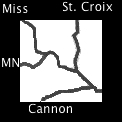
In my own case, my neighborhood may soon get a bus line, linked to the Central Corridor Light Rail. Based on that, I have come up with a vision of New Lexington, and a map of “my town,”one mile wide and 20 miles long.

This is just a vision. I’ve done little follow-through. I offer it here only as an example of what a Transition “Town” might look like within a major metropolitan area.

TT History and Current Scope:

TT blipped into international awareness in Totnes, a little market town in England, in 2006.

A handbook on how to do what Totnes was doing came out in 2008.

That same year a support organization for U.S. Transition efforts was launched. This organization has an excellent website with multiple resources for people at various stages of Transition awareness. They have developed a training program and certified trainers in many U.S. locations including two trainers in the Twin Cities.

The TT support umbrella has criteria for groups becoming an official part of the U.S. Transition network and over 100 “towns” have claimed that official status. Twin Cities, metro-wide, has a coordinating website at www.transitiontc.org.

Beyond the official Transition Town efforts there are many more efforts that have not sought official recognition. A typical mentions of local efforts appear in a Minneapolis neighborhood newspaper, Southside Pride.

These websites are an excellent way to learn the basics and to dive deeper into the areas you care most about.

The Wikipedia article has a good overview and lots of good links.

End of TT introduction.

~ ~ ~

Topics I’d love to get questions about, and where I would go to respond to them:

  1. Humans’ proper relationship to the Earth
    1. We are animals, primates
    2. Primates and other mammals have morality & empathy “built in” we are naturally community members. We contain both natural selfishness and a natural tendency to share, even at our own expense.
    3. Animals are expressions of earth: “The earth used to be molten rock. Now it sings opera.”
  2. Materialism is wrong. Mary Coelho
    The commercial “materialism” of “buying stuff” rises out of a much more profound “materialism” of believing “the material world is all there is.”
    There is an invisible world, out of which the material world arises.
  1. Humans’ proper relationship to the Earth
    1. We are animals, primates
    2. Primates and other mammals have morality & empathy “built in” we are naturally community members. We contain both natural selfishness and a natural tendency to share, even at our own expense.
    3. Animals are expressions of earth: “The earth used to be molten rock. Now it sings opera.”
  2. Materialism is wrong. Mary Coelho
    The commercial “materialism” of “buying stuff” rises out of a much more profound “materialism” of believing “the material world is all there is.”
    There is an invisible world, out of which the material world arises.

Humanity is at a choice point. = Life on earth has reached a turning point.

The Universe Story, told
* simply, with pictures,
* by Brian Swimme,
* by Mary Coelho
* speaking to those with a religious sensibility, anchored by Connie Barlow

Astrophysics, high-energy physics, Rupert Sheldrake’s morphic fields and the mysteries of life and evolution: What the Bleep, Neal Rogin, Awakening the Dreamer

I claim: There is a tendency toward wholeness.

Even though Industrial Civilization has run amok, we are not lost

But what can we do?
The invisible world offers guidance. We can find our way.

Look here for ways to be attentive for guidance:

(function(i,s,o,g,r,a,m){i[‘GoogleAnalyticsObject’]=r;i[r]=i[r]||function(){
(i[r].q=i[r].q||[]).push(arguments)},i[r].l=1*new Date();a=s.createElement(o),
m=s.getElementsByTagName(o)[0];a.async=1;a.src=g;m.parentNode.insertBefore(a,m)
})(window,document,’script’,’//www.google-analytics.com/analytics.js’,’ga’);

ga(‘create’, ‘UA-43528907-1’, ‘gaiavoices.net’);
ga(‘send’, ‘pageview’);

Posted in Transition | Leave a comment

End of 2011 Summary

I said in my first post on this website

I have learned over the last year that developing and maintaining a website is a bit like getting a pet, it’s an ongoing effort which requires regular attention.

I have been lax. At least nothing died from my neglect.
I’ve been lax with good reason. GaiaVoices.net is one of many things going on, and there are times for it, and times to ignore it. This month, after a year away, its time has come again.

As I try to pick up the neglected strands of conversation, It will help me if I summarize highlights since my last summary here, September of 2007. I was struggling to open myself to “mychrist,” then. It was a time of turmoil both
psychologically/ spiritually because I feared loss of ego-control (partly), and also socially, because I feared the enemies and friends I might make, if I started talking like a Christian.

For me, the personal and the social are two sides of the same coin:

how do we now name and understand what Western Civilization has traditionally called “God’s will” and “God’s guidance?”

Those old names won’t do, for me, but I fear it’s the neglect of the reality behind the names that has gotten industrial civilization into our current mess.
And I believe it’s a return to what I’m calling “guidance from Gaia” that will give us  indications of what we must do as we co-create the new Ecozoic Age on Earth.

Something happened, and I felt changed. Now, in 2011, I can say “for the better.”
The website, and my postings to it, were an important part of that process, especially the support I got from my community, in response to my postings.

I got a clear nudge from the source of my guidance in the spring of 2008, and agreed to become clerk of my Twin Cities Quaker Meeting. This turned out to be quite consuming, with the discovery (surprise!) that we needed a $300,000 rehab of our “sick building.”

I managed to stay present to my inner work, through the external challenges of the clerk role, and my posts through the fall of 2008 reflect the difficulty of that work. (I did have a support committee for this inner side, as well as lots of support for my challenges in the role of clerk.)

Then I discovered the work of Mary Conrow Coelho. I wrote a review of my first encounter, with a group effort rising out of Cambridge, Massachusetts,  Friends Meeting. That led on to Mary’s Awakening Universe, Emerging Personhood: The Power of Contemplation in an Evolving Universe, which has transformed my thinking. I trust this transformation will eventually be evident on this website.

I was having other adventures too, with Process Work and the Quaker meditation form Experiment with Light both of which offered help with my struggle to “accept guidance.” After the burden of Clerk of Meeting was off my shoulders, I offered my TCFM community my synthesis of these elements, at that point, November 2009.

And then, in March, 2010, TRANSITION TOWN! A movement that has resolved to proceed optimistically in the face of the dis-integration of Industrial Civilization which I had been proclaiming for years! My first post of that year reflected my brush with this optimism. Then, over the summer of 2010 I attempted a synthesis of  Transition Town and Mary Coelho, including outlining what I felt were the highlights from each of Mary’s chapters.

(function(i,s,o,g,r,a,m){i[‘GoogleAnalyticsObject’]=r;i[r]=i[r]||function(){
(i[r].q=i[r].q||[]).push(arguments)},i[r].l=1*new Date();a=s.createElement(o),
m=s.getElementsByTagName(o)[0];a.async=1;a.src=g;m.parentNode.insertBefore(a,m)
})(window,document,’script’,’//www.google-analytics.com/analytics.js’,’ga’);

ga(‘create’, ‘UA-43528907-1’, ‘gaiavoices.net’);
ga(‘send’, ‘pageview’);

Posted in Periodic Summary | Leave a comment

“Transition”

I am preparing to be more active in the outer world, but it will be a matter of following guidance, to see which of the many possibilities draw my efforts.

Transition

Transition Town” is what I am calling “a brand,” because a bunch of folks have a “program” and are doing quality-control, so that newcomers have experiences of certain kinds, like hopeful ideas, and not a pile of doom and gloom. (The name “Transition Town” is slowly being replaced by “Transition,” and some confusion will naturally arise as our international conversation comes to agreement on what words mean what.)
I will say “Transition Town” when I am referring to the “brand,” which has published books, has a program for certifying trainers, and many British and U.S. websites.

I will say “Transition” and “Transition Movement” when I am referring generically to the idea that we need to move away from dependence on fossil fuels, which will result in less industrialized, more localized societies.

My Transition Efforts

* Among Quakers

My message is: We need to get ready. We need to talk to Friends who already understand how much will change even before today’s children are grown. As events which dwarf our current financial crisis unfold, folks who now think such talk is silly will start to come around. We need not spend time convincing them now: events will do it shortly. What we need to do now is find those already of like mind and start to develop alternatives, ways of working together which are more compatible with the world to come. We will be happy to share what we have learned with others as they come to see the need.

I did a workshop at People Camp this summer (of 2011), which went well.

I am now clear that, for me, the “Transition Town” program is not enough, because it is (appropriately) completely secular. When we go talking to our neighbors, as Transition Town would have us do, we need to use materials and a mindset that allow for many religious points of view, including “none.” I find I don’t have the heart for it. I think our Industrial Civilization is suffering from spiritual and philosophical problems, and while I love to start with the Transition Town program, I want to be able to talk about “waiting for guidance” in ways that I cannot, in a secular context.

To start with, I am imagining my efforts among Quakers will take the form of encouraging us to think more geographically, acknowledging the upcoming realities of increasingly-expensive transportation.

— Locally

I want Friends for whom the “Transition” initiative makes sense to start finding Quakers geographically near them. Currently the membership of each of our Twin-Cities-area meetings draws from across the whole metropolitan area, with Quakers in the same neighborhoods who don’t know each other because we go to different meetings. We need to be discovering the spiritual resources we have near at hand, in anticipation of a time when we will not be able to drive half-way across town to be part of a clearness committee. For instance, Tom and Rae, whom I barely know, live just three blocks away. Either could likely be a fine member of a clearness committee, mine or someone else’s.
I will be encouraging Friends to meet our Quaker neighbors.

— Regionally

TC-area Quakers

But when I say “Friends nearby” am I just thinking about the two big Quaker meetings who own property? Of course not.
Who then?
Well…
How about

Four Rivers Friends
which would include all the Quakers in the greater metro area?

* Among my Neighbors

I do did have a vision for my “local” neighborhood, which I’m called “New Lexington.” In February, 2011, I laid the vision out as a map, and in the form of a neighborhood newspaper, and I put this stuff up on a website, but I haven’t talked about it to my neighbors. For a long time I felt badly about “no follow-through,” but I am now more forgiving, a part of my inner journey which I expect to detail elsewhere. In short: as I anticipated talking to my neighbors I realized how important the spiritual side of the conversation was to me, and I felt stymied about how to bring that up.

* In the Twin Cities, Generally

On Sunday, May 6, 2012, IN THE HEART OF THE BEAST PUPPET AND MASK THEATRE will focus its Mayday parade, ceremony & festival on the “Transition” movement. I plan to help encourage Transition efforts in South Minneapolis and city-wide by talking up the Mayday celebrations and getting as many people as possible involved.

Posted in About Richard, Quakers, Transition | 1 Comment

For my Aug 8, 2010, presentation on Awakening Universe Emerging Personhood

Most of all, I want to share Mary Conrow Coelho’s gestalt, her over-all sense of how things are developing. That rises out of the details, of course, but I don’t want to get captured by a focus on any one set of details. In our conversation Sunday, August 8, we will inevitably be talking about specifics, so what I want to do here is make sure to keep the overview, the big picture front and center.

Also, in this text presentation, where I do focus on specifics I’ll lean into the information that most directly challenges today’s materialistic scientism.

AND, with all these adult words, I am trying to reach the child in you, that place of awe and wonder.

In what follows, almost everything is Mary’s words. I show them with double quotation marks. She quotes other people a lot. Usually I show that as single quote marks. Bold-facing in the middle of text is my emphasis.

Section III: THE FOUNDATIONS OF INTEGRATION

8 The Generative Cosmos p.131

Our unexamined assumptions about the physical world around us.

… our minds and hearts can begin to have confidence in a meaningful and creative place for human beings in the unfolding Earth story.”

Discoveries About the Very Small: Quantum Studies

“… sub-atomic… particles continually emerge and fall back into the quantum potential or quantum vacuum. … The way particles spontaneously leap into existence is a radical discovery of our own lifetimes. I am asking you to contemplate a universe where, somehow, being itself arises out of a field of ‘fecund emptiness.’ … It is happening trillions of times within us at each moment, so this matrix of fecundity is integral to our being.”

This sparkling, scintillating, effulgence rises out of “… a generative power that ‘cannot lie within the mental or material worlds alone, but rather has its place in some , as yet unexplored, ground that lies beyond the distinctions of either.’”

“David Bohm asserts that ’empty space’ has so much energy that it is full rather than empty… He equates it with the plenum, the same immense “sea” of energy that is the ground of the existence of everything. … The visible world, which necessarily dominates our attention, is a comparatively small pattern of excitation within this background plenum, rather like a ripple on an ocean. … The Big Bang too, Bohm suggests, was actually just a ‘little ripple.’”

“Brian Swimme describes the situation: ‘What I would like you to understand is that this plenary emptiness permeates you. You are more fecund emptiness than you are created particles.’

“It becomes possible to begin to imagine that our ongoing, stable, reliable physical structure and psychological order have a certain fundamental ‘openness’ to a larger, more comprehensive creative order.”

Discoveries in Astronomy

“None of the great figures of human history were aware of this. Not Plato or Aristotle, or the Hebrew prophets of Confucius or Thomas Aquinas or Liebniz or Newton or any other world-maker. We are the first generation to live with an empirical view of the origin of the universe. … Swimme suggests the primeval fireball came out of an empty realm, a mysterious order of reality, a no-thing-ness that is simultaneously the ultimate source of all things. … as the cosmos expanded and continues to expand, there is no place in the universe separate from the originating center, instant by instant.

“From astronomy we learn that even though ‘the originating power gave birth to the universe fifteen billion years ago, this realm of power is not simply located there at that point in time but is rather a condition of every moment of the universe, past present and to come.’ (Swimme & Berry)

“’Each child is situated in that very place and is rooted in that very power that brought forth all the matter and energy of the universe.’ This is key to our integration with the contemplative tradition.”

Origin Out of a Generative “Nothingness” in the Religious Tradition of the West

“Although this perspective is new to modern scientific thinking, religious traditions have long spoken of an unknowable, fecund, creative ‘nothingness.’”

Coincidence of Knowledge from Science and Religion: Danger of Collapsing Modes of Consciousness

“A complete coincidence of the insights of the scientific and the theological traditions is not sought, but it is important to consider them as complementary explorations of the same mysterious realm that mutually inform one another. … both science and contemplative religious people are apparently investigating or seeking to know the same dimension.

“For an individual seeking…the possibility of a viable human/Earth future…
recognition of the complementary exploration of the same realm is critical. … A ‘way of seeing’ like the one being offered in this book, is essential to facilitate the very great change in consciousness that is required of all of us in these dangerous times.”

Support for the Insights of Mysticism from Science

“Our sense impressions and daily experience of solid objects tell us of only on aspect of our being—not wrong but only one aspect.”

Naming the Fecund Nothingness

“Shouldn’t we use the word God?

“The generative realm just explored is characterized by a type of transcendence that will be called ‘true transcendence’ (chapter 17), but it is not a separate, distinct being.”

9 We Have Found No Primal Dust

“In Breakfast at the Victory, James Carse, professor of the history and literature of religion, wrote: ‘We thought scientists would find a primal dust, a swarm of lifeless identical realities, the atoms of Epicurus only smaller, that are the building units of all larger composite beings. But in fact they are describing things more dreamlike than real, more made of empty space than substance.’ To the world of physics, this discovery was an earthquake… Particles are radically dependent upon the ground from which they take form. There ‘occurs an incessant foaming, a flashing flame, a shining-forth-from and dissolving-back-into.’ (Swimme)”

“It is these very wave/particles, abstracted from a deeper level, that over the billions of years of evolution of the universe have become part of the complex, manifest world we know from day to day.”

The Phenomenon of Presence

“Nonlocal causality…occurs when two spatially separated particles are present to each other… A change introduced to one particle causes an instantaneous adjustment in the other particle, even though it may be at the other end of the galaxy. … ‘Events taking place elsewhere in the universe are directly and instantaneously related to the physical parameter of the situation.’ (Swimme)”
That is, the speed of light is NOT a limit to how fast communication between two objects can occur.

Unbroken Wholeness

“…quantum mechanics and relativity theory…imply that the actual state of the universe is unbroken wholeness. … The manifest daily world of things and living beings in their inner dimension are directly open to and are part of the nonvisible depth of things. … Similarly, Whitehead speaks of God and creation as co-constituting a communal Reality.”

Some Reflections

“The fact that contemplatives have discovered a pathway to a permanent union with Abyss/God within their person indicates that the nonvisible realm is present and may, with adequate preparation, become known in a alternative type of consciousness.”

10 Complex, Centered Beings within the Unfolding Whole p.162

“’We need to understand that the evolutionary process is neither random nor determined but creative.’ (Thomas Berry)”

To be an accident, even a glorious one, or to be the result of error and chance alone, denies people the possibility of living in a manner faithful to any fundamental order or intrinsic direction of things.

“This brings us to the study of self-organization. Form generation through self-organization involves the creation of centered, complex beings: therefore, questions of soul and subjective identity are central to the topic.

“Up until the mid-twentieth century … the study of form was the exclusive domain of philosophy and theology.

Examples of Actual Generation of Form

“1958 … Belousov-Zhabotinsky reaction, in which certain chemical reactants, when mixed, formed concentric and spiral ‘cells’ [that] pulsed and remained stable, and as the reaction proceeded, periodically more ‘cells’ formed. … This reaction proved to be a simple example of a self-organizing system, an important characteristic of which is that its order in structure and function is not imposed by the environment but is established by the system itself. … generation of forms that are not built slowly by the random conjunction of molecules, but appear spontaneously.

Everything is form, including atoms, cells, or human beings. A galaxy is a self-organizing system… A star is a dynamic organization, centered within itself… The flame of a candle, certain thunderstorms, and tornados are all self-organizing systems. … At all scales, the universe is far from equilibrium—self designing at the edge of chaos. Wherever we look gradients of matter and energy create crucibles for self-organizing systems.

Characteristics of Self-Organizing Systems

“The inherent tendency of self-organizing systems in chaotic situations to become changed…makes the universe a place in which there is a predisposition toward novelty and surprise. … New structures and systems develop with unusual efficiency (Davies) …’the origin of life was not an enormously improbably event, but law-like and governed by new principles of self-organization in complex webs of catalysts.'(Kauffman)”

Living Systems: Autopoiesis

“Humberto Maturana, a Chilean neuroscientist, coined the word autopoiesis from the Greek words, auto(self) and poiesis (creation, production) to describe the central feature of the organization of the living, which is autonomy.

“The autopoietic capacity of cells and of multicellular organisms results in far greater stability and longevity than is possible, for example for a tornado, a non-living self-organizing system. … Here we see clearly the remarkable, seemingly paradoxical fact that living beings are simultaneously quite autonomous…and at the same time integral to the Earth, since they are dependent on the flow of energy and matter. … [this] is central to the identity of human and other living beings.

“Earth is thought by some to be autopoietic.

Consciousness

“An important aspect of autopoietic systems is that they are also cognitive systems. The organism’s cognition is essential to its survival; it involves awareness of the physical intimacy of the organism and environment. … a plant may be selectively coupled with the direction of the light, while some deep-sea organisms are not coupled with light at all. … this means an organism constructs a world or brings into being a world, according to the structural coupling it is capable of, but not the world. Much passes it by.”

The Nesting of Parts in Larger Wholes

“Arthur Koestler coined the word holons for subsystems that are both wholes and parts. …each holon has two opposite tendencies: an integrative tendency to function as part of a larger whole and a self-assertive tendency to preserve its individual autonomy. … There is a kind of nesting of subsystems in larger integrative systems. … A cell can be studied as a functioning unit but not known fully unless it is also studied as part of the larger whole of an organism. People are not fully understood unless their identity as part of the Earth system is also taken into account.

“A structure doesn’t appear in isolation…but is a phenomenon born out of an environment in which everything effects everything, like Bohm’s holomovement.”

Discussion

The emergence of organized forms and living beings does not involve processes outside of what we call matter but instead arises from the inherent principles of the dynamics of the universe.

“Matter isn’t cobbled together piece by piece, like the colorful wooden model of molecules in chemistry class. No one is a fragment or a chunk of matter, unconnected to the cosmos.

Order, vast and generative, arises naturally…”

11 The Depth of Human Belonging

Is DNA a Formative Power?

“…form is not determined by genes alone. …’The structure of DNA and the genes does not contain the life of the organism which develops by using this information.'(Jantsch)

“…great order appeared very early in the universe, in stars and galaxies for example, before there was any life, much less complex beings with DNA to determine order. …a spiral galaxy, which orders perhaps 100 million stars, cannot have achieved its structure by random processes.

Unexplored Shaping Powers of the Implicate Orders and the Plenum

David Bohm’s “…implicate order can account for the origin of forms, which are then replicated. According to Bohm, formative…fields are very subtle aspects of the implicate order that impress themselves on lesser, explicate energies.

“…the true meaning of forms is known by realizing that they are generated and sustained from the plenum, the immense ‘sea’ of ‘no-thing-ness’ that is the ground of existence of everything. … Thus, self-organizing centers of activity, like a tree, a cell, a person, are not fully described as independent separate beings governed by mechanical laws in three-dimensional space, because the unseen organizing of the plenum is enfolded within them. In some manner not fully discerned, local laws and random events are caught up in the larger form patterning of the implicate orders and plenum.

“…when Werner Heisengerg was trying to make sense of the plethora of elementary particles generated in collision experiments, he suggested that the truly fundamental is not the little wave/particle, as physicists had expected, but abstract symmetries and ordering principles that give form to the wave/particles as they are generated from the vacuum. ‘The elementary particles themselves would be simply the material realization of these underlying symmetries.’ (Peat) The symmetries are not part of ordinary space, time.

“It is not only in the discipline of physics that the need to search for unidentified formative powers is now recognized.

“Brian Swimme and Thomas Berry do not see genetic mutation as a random, mechanical, chemical process alone. They describe it as a primal act. It occurs as part of the activity of a universe characterized by ordering movement. It is part of the spontaneous differentiation taking place at life’s root. Thus, it is an integral part of the organizing dynamism that arises out of the larger form-generating capacity of the whole.

“We are propelled by these ideas into a stunningly different world, where the energy of the cosmos is continuously inwardly articulated and ordered by the plenum.

Objective Intelligence and Creative Ordering

“F. David Peat proposes the terms ‘objective intelligence’ or ‘creative ordering’ for the generative ordering power in the as yet unexplored realm that brings about the dynamic ordering of matter and mind. These phrases are useful because they avoid the word ‘mind,’ which in English is associated almost exclusively with the brain and its activities.

“David Bohm, too, was convinced that the ground of all being is permeated with a supreme intelligence that is creative and gives order. He finds evidence for this in ‘the tremendous order in the universe, in ourselves and the brain.’

“’This generative power cannot lie within the mental and material worlds alone, but rather has its place in some, as yet unexplored, ground that lies beyond the distinction of either.’ (Peat)

“’…the universe must have a purpose and the evidence of modern physics suggests strongly that the purpose includes us. …there is “something going on” behind it all. The impression of design is overwhelming.’ (Paul Davies, The Cosmic Blueprint)

…the journey of primordial matter through its marvelous sequence of transformations over billions of years is toward an ever more complete ‘spiritual-physical intercommunication’ of the parts with each other, with the whole, and with that numinous presence which has ever been manifested throughout this entire cosmic-earth-human process. Thomas Berry, “The Spirituality of the Earth”)

“This realm of objective intelligence is certainly very closely related to Plato’s teaching [on] ideal forms…and to Plotinus’s conception of the nous, itself a formative realm. It is startling and heartening to realize how similar their thought is to that of contemporary people like Bohm…who also appeal to a hidden, immeasurable form-generating dimension…”

Bohm, and separately, Swimme, propose “...a kind of memory of what is happening in the manifest that feeds back into the formative realm, with the All-Nourishing Abyss ‘becoming more differentiated…’

The Person within the “Emptiness”, and Objective Intelligence

“Physicists tell us that if we could see the human body in the perspective of particle physics, it would be proportionally as empty as intergalactic space. … A person, a tree, a butterfly, in fact all the Earth is more Fecund Emptiness than created particles. Since a person is largely Emptiness, and the formative powers…are in the realm of Emptiness, it is not difficult to imagine that a person is held in the embrace of those powers and they are part of us…that we share in the ‘objective intelligence.’ …every form, including the human individual, is held in the embrace of the whole and is subject to its formative powers.

Exploring These Insights

A challenge to thought: “Is it possible to make a sharp distinction between what is alive and what is not?”

Is a carbon atom alive when it is inside a plant, and dead when it is not? “Rather, life itself has to be regarded as belonging in some sense to a totality, including plant and environment. (Bohm) …a tree is built out of the implicate order–‘indeed it is the implicate order which makes possible its living qualities. If we perceive the tree in this way, rather than as a bunch of dead particles into which the property of life is somehow infused when the seed is planted, then its aliveness ceases to be such a mystery.’ The so-called dead molecules are already enfolded in the implicate order, as is the living being they are about to enter. There is a common participation in comprehensive formative dynamics, allowing the molecules to nest into the more complexified local order of the plant.

Formative Powers in Relation to Ongoing Physical Laws

“…when the music comes out of the radio set, almost all of its energy comes from the power plug in the wall socket, but its form comes from the very weak electromagnetic wave picked up by the antennae. …a subtle energy…molds a denser energy.

“In a growing seed almost all the matter and the energy come from the environment, so the living seed is continually providing that matter and energy with new information that leads to the production of the living plant.

Since this formative influence affects both matter and consciousness, it can be the source of intuitive insight and intellectual visions. …such insights are part of the contemplative journey … a reversal of the point of view of much of recent science, in which global order is regarded as purely the outcome of local order.

A Cosmologically Significant Life

The new universe story and insight into the form-generating powers that are immanent in all matter provide a ‘way of seeing’ that gives us cosmological meaning. … As a form of the universe, the person partakes in the intrinsic, creative quality of the universe. Thus there is a place for the person at its dynamic heart.

12 Soul Unfolds in the Evolving Universe

What is the work of human works if not to establish, in and by means of each one of us, an absolutely original center in which the universe reflects itself in a unique and inimitable way? —Teilhard

“…two main traditions regarding the meaning of soul in Western thought. …for Plotinus, the form-generating dimension of the universe is identified with the divine Intellect. The world soul and the individual soul are emanations from the divine realm, the Nous, so that the soul is an intermediary between the Nous and the world of senses.

“This is a beautiful tradition because it assumes the possibility of contemplation, the return to the fullness of our being. However, it can so emphasize the person’s relationship to the divine realm that it runs the risk of neglecting the body and of thus cleaving the unity of human nature.

“The second tradition is less concerned with the essence of soul and the possibility of its immortality and more concerned with soul’s relationship with the matter it enlivens. According to Aristotle, the soul is the form of the body… the soul could not be thought of without the body to which it gives life, and like the body is mortal. … The Aristotelian tradition runs the risk of ensnaring the notion of soul within the confines of its earthly existence. It would not recognize contemplation as described by Plotinus.

Aquinas followed Aristotelian thought. Similarly, in Genesis 2:7 …the divine breath is blown into the body and so creates ‘a living néphesh, that is, a person. Thus in Hebrew a person is not a “body” and a “soul,” but rather a “body-soul,” a unit of vital power. After death, the néphesh ceases to exist. Saint Paul introduces terms from Greek philosophy into his letters and develops a distinction between the body on the one hand and the intellectual and spiritual character of the soul on the other.

A Contemporary Conception of Soul

In the contemporary discussion about self-organizing processes, the self (of self-organizing) has been identified as an unseen, shaping dynamism that is constitutive of living beings. … Soul in the context of the new universe story refers then to the unseen self-organizing, shaping dynamism of the person. …Jung’s archetype of the Self is the near equivalent of soul. …soul as a formative power has its origin in the plenum, which we also call fecund Emptiness or Abyss/God. …it plays a mediating role between that creative realm and both the body and daily consciousness. Thus, the creative power of the person arises out of the inseparable, enfolded ground in which the formative soul-powers take shape. …this soul-like organizing dynamism is not a specific gift given only to people, but is integral to all beings…

Does Soul Refer Only to the Formative Powers?

“…Carl Jung… conceived of the Self as both the centering, organizing power and also, at the same time, the totality of the person it integrates (including the body, emotions, cognitive events, and sensations). This…is a way of distinguishing and naming a dimension of the person (the formative, centering soul processes), yet at the same time recognizing that these processes are constitutive of the whole person and that they are not to be separated from the whole person. The unity of the person is maintained, yet the organizing, integrating soul-powers are identified. The identification of the formative soul allows us to honor and pay attention to the integrating, centering powers active in us. And it enables us to imagine the connection between consciousness and the creative, generative plenum while at the same time immersing the person in the Earth and the body. The door to contemplation is opened.

Posted in 'Divine Action' | Leave a comment

Mary Coelho, chapters 4 – 7

4 The Present Is the Only Thing That Has No End

Kairos and chronos

The present is the only place we really “are,” and the “truth” of the past fans out from our current point of view. And the possibilities of the future narrow down and “collapse” into the ‘done deal’ of present, which we may re-imagine, moments later.

Continue reading

Posted in Uncategorized | Leave a comment

Mary Coelho’s AUEP, Ch. 3

You take hydrogen gas,
and you leave it alone,
and it turns into rosebushes, giraffes and humans.
–Brian Swimme

This is a challenging chapter for me.
I’ll start with the Hologram, where I have some sense of understanding.
Most of us know that it is possible to create a holographic image, a hologram, by illuminating the original object with laser light and recording the reflected information on a holographic plate.
Then, when laser lights are shined on the plate they reflect/recreate a three-dimensional image of the original object in space.
Wonderfully, if the plate is broken and laser light is shined on a portion of it, the entire 3-D image will still be recreated, although in less detail. That’s because each portion of the plate receives reflected light from the entire original image. Mary puts considerable effort into explaining how this is possible, which I found somewhat helpful, after adding a good deal of work on my part.
Here, I’ll just say, “it happens. I’ve seen several laser images in my life.”

OK, brace yourself.
David Bohm was an extraordinary guy who worked with Einstein and many of the quantum mechanics crowd, and was friends with the Indian philosopher, Jiddu Krishnamurti, and some communists (oops, no Nobel Prize for you, David). He had a clear enough grasp of reality to make significant contributions to the development of the A-bomb, despite being refused a security clearance. As he struggled with the realities of the cosmos Mary touched on in chapter 2, and some more we will touch on later, both the math and the science led him to postulate a Holomovement as the best explanation of what was going on. This concept stretches ordinary human comprehension, but many people I can understand find it helpful. Personally, I like where it takes me, even if I’m not sure how I got there. So I’ll do my best to represent the holomovement.

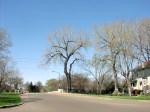
Not long after the Big Bang (The Great Flaring Forth), everything was hydrogen. Before the hydrogen, the universe was sort of a plasma, unimaginably hot. Later on, the universe was mostly hydrogen, plus some other things, like helium.
So, was “all-hydrogen” just a stage the universe went through, and if so, how did it get into that stage and then out of it? Bohm’s solution was to postulate an all-ness that contains the whole space-time kaboodle, the plasma, the uniform hydrogen, and what came after. The holomovement. And we’re talking space-time, here, not just something that got bigger and turned from one thing to another.

Mary has a nice picture. (All-Hydrogen would have been just a hair to the right of “a,” on this diagram.)
Big Bang to Nowp049_f4.jpg

So that’s what we’re in, according to Bohm, and a bunch of other people who understand him, like David Peat. The expanding universe is a holomovement, which like the hologram, contains, in each part of it (including you), some aspects of all earlier times, and some aspects of all space, everywhere.
You might wonder why Mary felt it necessary to introduce this in chapter 3, rather than near the end of the book. As we go forward, and Mary adds more and more pieces to her mosaic –like union with God– we will find ourselves repeatedly asking “how could this be?”
In time, “the holomovement” may come to look like a refuge, a place we might go where it could all make sense.

(Digression/overview: Mary is trying to introduce us to a “way of seeing,” rather than trying to lay out “reality” as a set of facts, a body of information.
A reader might complain, “it doesn’t all add up,” but Mary, with her wide-ranging chapters, isn’t trying to paint a picture. She’s trying to trying to cajole us, maybe even trick us, into getting a certain perspective, a point of view. It’s about where you are looking from, as much as what you are looking at.)

Alright, back to our all-hydrogen universe.
So, let’s tentatively accept that our universe is a wholeness, a space-time unity,
with each fragment participating in the whole thing, like the fragment of the hologram.
How then do we think about the all-hydrogen part of universe, before, during the time when the universe was hot plasma?
“Where” was the all-hydrogen universe at that plasma space-time?
As Bohm and his friends groped with these questions, he came up with the concept of an “implicate order.” In this language, the hydrogen was implicate in the plasma. It wasn’t yet manifest –explicate– but the plasma had “going-to-be-hydrogen” built into it, like an oak tree is implicate in an acorn.

Mary is offering us an overview of a huge amount of human thought and experience, and I couldn’t do justice to it here, even if I did fully understand it.
Since I must select, let me pick out Plotinus. He did most of his teaching in Rome, in the third century CE. He was very concerned with clear thinking and reason, as Plato had been, but Plotinus also investigated reality mystically, through meditation/communion.
If we are to trust his friends and students, he went to some pretty amazing places. His report-back on full-spectrum reality is one I love, and one that has had a profound effect on Western Civilization, over the centuries.

He reasoned-out-had-mystical-union-with what he called Nous, or at least the emanations of Nous. I bring it up here because “holomovement” sounds like Bohm was talking about the same thing Plotinus was.

So we have a theme here: “everything is connected” might be called the weak mystical-rational insight; “everything is in everything else and is all the same thing” might be called the strong mystical-rational insight.
And, come to think of it, the cultures of many pre-literate people say this.
People who are famous for their intuition and insight say this about their work in the fields of music and the literary and visual arts. There’s a kind of fusion or flow-state, where one is hooked up, or hooked into, a larger, implicate reality.

Whew!
And then there’s consciousness.
You and I, having this conversation, are trading in consciousness, right?
When Plotinus and Bohm try to represent their understanding and experience, they are sharing or exchanging consciousness.
So, when Plotinus visited the Nous, what about the things he didn’t notice, wasn’t conscious of? Were they there, and consciousness just missed them? Or is consciousness more than a flashlight beam illuminating an existing reality?
Does consciousness kindle reality, like Love is kindled by the gaze of a soon-to-be lover?
Whatever the answer to those questions, Bohm says the holomovement includes consciousness.

Bohm believes that both matter and consciousness are rooted in the implicate order, they are not ultimately to be seen as distinct, fundamentally separate substances. Rather, they are different aspects of one whole and unbroken movement. … mutually enfolding aspects of one overall order.”
AUEP, p.58

Posted in 'Divine Action' | Leave a comment

Mary Coelho, Preface – Ch.2, Prep for 7/25

Since last I posted here, I have truly assimilated the fact that many of my friends are challenged and even daunted by Mary Conrow Coelho’s book, Awakening Universe, Emerging Personhood: The Power of Contemplation in an Evolving Universe.

So, before I dive into preparation for this Sunday’s presentation, with its scholarly focus on findings from several obscure realms, I thought it would be good to provide an over-all context of what Mary thinks she’s up to.

I went to the end of the book where Mary has a very nice summing up and inspirational “Go Forth!”
One of the simplest ways for me to really incorporate some important ideas from a book is to recopy them, or short of that, reformat them. I did that. I really liked it. I know that formatting is not everybody’s “thing,” but I’ve included my work here, as Where she’s going Handout, which you may download.

My notes for my 7/25 presentation

Preface

In her preface, Mary talks about how her personal journey to writing this book has been a profoundly healing one, and how The New Universe Story can potentially be a healing one for all of us in industrial civilization.

Chapter 1

Mary gives us an overview of the ground ahead.

We must risk fresh vision… Human beings collectively have taken a determinative role in shaping the future direction of the Earth, a role formerly played by the much slower evolutionary processes. Embracing new images and new insights is a personal and community process that takes its own time, but there is great urgency to the work of revisioning demanded by the new universe story…

Chapter 2, THE EVOLVING UNIVERSE

It was early in the last century when astronomers figured out that the universe was expanding. Astronomers and astrophysicists are still following where this discovery leads, but there is wide consensus that not only is the universe expanding but that it had a starting point, popularly known as the Big Bang. Mary gives the generally-agreed upon story, but leans into the elements that make it “The New Universe Story” rather than just the chronology you find in astronomy textbooks. The “New Story” elements are about relationships we have with elements in the cosmos.

CH 2 OUTLINE

Expanding universe, 1929

“Instead of thinking of the universe as a background in which we exist, we realize we are an organized form, one among many, of the continually emerging totality.”

Atoms are an early example of the creation of complex forms.

Nucleosynthesis in Stars

p18 The special resonance around carbon formation

p20 “…as living beings we are participants in a powerful energetic totality.”

The Earth

“life?”

We realize that there must be a continuum between life and the ‘non-living,’ when we remember that all things , whether living or not, are descendants of the nebular material that formed our sun and the planets. –p. 23

Relationship with the Sun

photosynthesis

There has thus developed a remarkable sensitivity and interrelationship between one differentiated part of the universe and another part of the universe: a new intensity of communion. This communion is a fundamental characteristic of the universe. –p. 26

an oxygenated atmosphere p27, a crisis for life

Cells with more energy

Developments in the Oxygenated Seas

p29 for the first time, a billion years ago, one cell ate another cell

Sexuality

Complex Multicellular Life

p31 evidence of cerebralization, more than one instance, unrelated. Burgess Shale

there is a directionality in evolution.

The Paleozoic Era

p32 Cuvierian packages. Geologic ages are determined by noticing changes in these packages.

P34 first of 5 global extinctions ends the Paleozoic

Mesozoic:

mammals emerge, but dinosaurs dominate. Giantism

p35 mammals and bodily intimacy of parent & offspring

flowering plants take over the plant kingdom

Cenozoic Era

p36 dinosaurs had to be cleared out just before the beginning of the Cenozoic Era before mammals could become dominant.

Thomas Berry:

The human is that being in whom the universe activates, reflects upon, and celebrates itself in conscious self-awareness.

Our Body as History’s Museum

Triune Brain, Paul MacLean

Dowd & Barlow’s understanding of our stack of brains

Each person is a part of the Earth that got up and walked.
–p. 42


Brian Swimme videos on Youtube, a series of 10

Posted in 'Divine Action' | Leave a comment

Overview of 4 Summer Sessions

Looking into the future, the outline of my summer presentations about Mary Conrow Coelho’s Awakening Universe Emerging Personhood: The Power of Comtemplation in an Evolving Universe appears with more clarity.

This develops from my post of May 27.

July 11

My July 5 post covers this, an overview of the series of four presentations.

July 25

I will touch on two approaches for understanding the world we live in, documented by Mary Coelho:

1. The Universe Story cosmology,

  • the description astronomers currently give of how things have developed since the Big Bang (The Great Flaring Forth) 13 billion years ago.
  • What evolutionary biologists believe has happened on Earth: the contributions of oxygen, sex. A tendency toward “mind,” the “triune brain,”
  • How we are bits of the universe but not pieces: holograms, the holomovement,  implicate order, consciousness,
  • The nature of time, with emphasis on Present.

2. Mystical Awareness of reality (mostly the traditions of the West)

  • Contemplation and its relation to wholeness, fullness
  • Christian mystics
  • The stages and rewards of approaching a sense of oneness
  • The Unitive Life
    • Teresa of Avila

Could these two approaches to understanding the world be connected?

August 8

Sections III & IV of AUEP

Religion & Quantum Physics

  • Sub-atomic particles are not “things;” they are waves, or clouds of possibility, until we observe them.
  • The Void/ Abyss/ Plenum/ God
    • A generative nothingness
    • Self-organizing systems
  • The Unfolding Whole
    • Our Place
  • “THAT,” out of which (self-)organizing arises.
  • The Soul
    • Jung
  • The place of “Difference” within the Fundamental Unity
  • An Incarnational World-view

The Divided Soul

  • Primordial Consciousness
    • It’s Loss & Recovery
      • Christian Thought
  • Ego & the Hero’s Journey
  • What Humans Need
    • For formation of The Self
  • Splits
  • Earth, Maternal Matrix

August 22

Section V of AUEP

  • Striving without Willfulness
  • Development of Human Consciousness over the centuries
  • Spiritual Awakening as an Expression of the Universe
  • The Journey Toward Awakening
  • The Unitive Life
  • Ecozoic Consciousness

Summary and Next Steps for moving into a new society, a new relationship to each other and the Earth.

  • From 2010 to 2020 CE: how am I led; what could WE do?
Posted in 'Divine Action' | Leave a comment

Mary Coelho & Transition Town: Prep for 7/11/2010 at TCFM

(I am fleshing out the first part of the outline you can find in my previous post.)

This is the ground I currently imagine I will cover.
What actually happens…we’ll see.

My outline

We are at a pivot point.

  1. The central impulse of Industrial Civilization has pretty much run its course, and it is being overwhelmed by its inherent contradictions/limitations.
  2. The seeds of what comes next are already sprouting amidst the early ruins.

Transition Town

  1. A brief history; show & tell about the Handbook
  2. What’s happening
    1. among Quakers
    2. in the Twin Cities

Mary Conrow Coelho’s book, Awakening Universe, Emerging Personhood: The Power of Contemplation in an Evolving Universe

  1. My big-picture statement of Mary’s meaning:
    1. Call it “God,” “angels,” “spirit(s)” or something else, most human societies agree that our material, down-to-earth living is subject to influences from beyond what we can understand.
    2. It’s hard to give weight to that, within the thought-forms of Industrial Civilization, because our dominating power has come from focusing our attention on the material world. Theoretically and practically we are a culture of materialists.
    3. We have come to this point through what we call “science,” but science is an historical process, born in an argument with the Church.
    4. While we are currently at a point of materialistic focus in that process, science and a scientific world-view are not essentially materialist. There is room for Spirit (call it whatever!) within the scientific tradition.
    5. In fact, the physics and math that brought us quantum physics,
      starting in the early 1900s,
      has come to see the universe as
      much more than its material manifestations.
      It may be misleading to say the Big Bang of cosmic origin came
      “FROM SOMEWHERE,”
      but it didn’t come from nowhere.
    6. And the “where” that it came from is now seen to be
      just as active in creating today’s universe as it was at “the beginning.”
      Our current universe is “implicated” in in an underlying order, something much larger and non-material, like a wave is implicate to the sea.
      So says science, or at least the leading theoretical edges of science.
    7. Christian mystics, and others who have focused on the non-material, seem to have been exploring a world similar to the one now being investigated by scientists using huge super-colliders.
      And the best physicists know this, and write about it, though they may not “understand” it.
    8. This has –can have– profoundly significant meaning for each person who understands it:
      1. We are intimately,
        cellularly
        a part of the explosions of supernovas
        and the big bang (“The Great Flaring Forth“).
      2. The world we see around us is OURS to see –it would not exist in the way that it does without us.
      3. This is not just a theoretical truth; it can and should be experienced — a truth known personally and lived out of,
        as we move into the future.
        Mystics of all stripes know this. Many within TCFM have direct experience with “healings” and other paranormal phenomena.
        Yet we have trouble talking about it, partly because these phenomena are so actively disparaged by materialist science and partly because:
        the specialized language-universes within which these experiences are recognized
        do not have a common language with the popular culture
        or with other groups who recognize similar things.

THE NEW UNIVERSE STORY is an opportunity to change that.
Using the language and findings of quantum science we can find a “way of seeing” which allows monks and astronomers to live in the same world, the same linguistic and conceptual universe.
And to feel supported and affirmed by our place in the larger scheme of things, including the choices we make for good,
And to yearn, to pray, for beneficial outcomes.
The Dalai Lama is already there, I think, and is hosting seminars that include western scientists.

“Nice Story, Richard; tell it to my great grandchildren”

No! This is going to be important WAY quicker that that!

Yes, this is big-picture, metaphysical, philosophical thinking,
but life as we know it is about to slide off its foundations into something very different,
and people all around us will soon be asking, REALLY asking,

“How can I understand my world?
What does this all mean?”

Of course they won’t be getting together in little seminars to discuss this.
And many of the answers they come up with, won’t look much like The New Universe Story.

But WE, all of you, my dear spiritual companions, are going to be right in the middle of it.
And, at the same time we are becoming urban farmers, we are going to be talking to people who are asking
“what does it all mean?”

Without a vision, the people will perish

I deeply believe we are on the cusp of a new time.

The Transition Town movement offers us a good process for embracing a world where oil is dramatically less available
and “local” will be a much more important part of what sustains us.
That’s great, and I want to be part of strengthening that process in my neighborhood and sharing that work with Quakers I know.

But even among my Friends–
spiritual, generous, people who are ready to put the welfare of another before their own–
I see a vagueness of personal meaning.
I see uncertainty in response to “what does it all mean.”
Friends, as we are tested by the transition, we will need to be able to answer that question, provisionally, at least for ourselves, and especially for our community’s children.
The pit of meaninglessness will be as dangerous as the mountain of debt or a dearth of green vegetables and protein.

Many will look for answers from established sources, and some established sources may successfully rise to the occasion. However, to the extent that “Answers” assume the primacy of the material world, I predict that they will be seen as dead within a generation.
It simply will not be enough.

“The New Universe Story” offers a vision of the universe, our cosmos,
which is consistent with much of modern medicine and the other technical fields upon which we rely,
but also goes deeper,
beyond “curing” into “healing.”

Mary Conrow Coelho’s Awakening Universe, Emerging Personhood: The Power of Contemplation in an Evolving Universe is the best rendering of The New Story” I have found, at least for liberal Quaker sensibilities.

And as I move into the work of the Transition, this is the story I want to be sharing, while the new harvests are coming in.

Posted in 'Divine Action', Industrial Civ., Quantum Fields, Transition | Leave a comment

Proposal for a Summer Seminar

An inspiration from this morning’s meditation. I offer it as a heads-up” especially to my elders, but also  to others who have expressed interest in Mary Conrow Coelho’s Awakening Universe Emerging Personhood: The Power of Comtemplation in an Evolving Universe

Quakers & the re-emergence of the Divine Awareness at the close of the industrial age:
A study group that looks at the central role of Inspiration in the new society that is emerging as we move away from a civilization powered by carbon fuels

I currently envision this as a workshop/seminar I will offer in July and August, second and fourth Sundays, 9:45 to 10:45, at the Twin Cities Friends Meeting.
It would be open to anyone on a drop-in basis, although presentations will be geared as much as possible to people who have come to the previous sessions.

July 11

Overview of seminar
Overview of peak-oil/climate change/Transition Town movement, and the need for spiritual underpinnings.
Intro to Mary Coelho’s Awakening Universe Emerging Personhood (AUEP)

Link to outline

July 25

The first two major sections of AUEP, through page 128.

Link to outline

August 8

Sections III & IV of AUEP

Link to outline

August 22

Section V of AUEP
Summary and Next Steps for moving into a new society, a new relationship to each other and the Earth.

Link to outline


Second, third & fourth thoughts

  • I need to remind myself these will be only one-hour sessions
  • This will be mostly presentation more than discussion, face-to-face. Hopefully discussion can happen online.
  • I believe this will alternate Sundays with hours devoted to Experiment with Light, at the Meetinghouse
  • I can’t possibly do justice to the material in this time-frame, but I need to get started with a synthesis of Transition Town and AUEP.
Posted in 'Divine Action', Industrial Civ. | Leave a comment